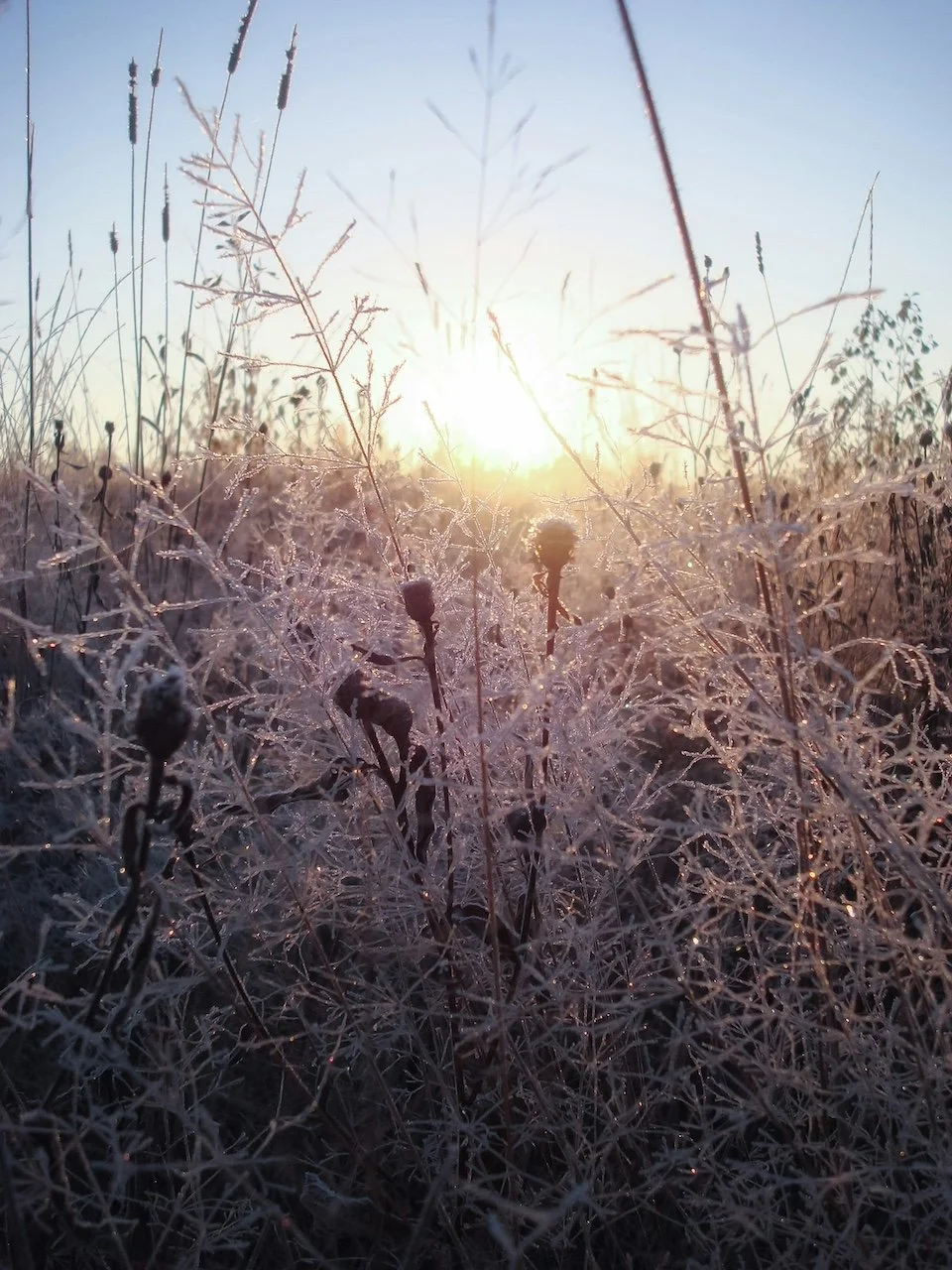
Yule — The Longest Night & the Returning Light
Yule arrives at the Winter Solstice, which falls around December 21–22, when the sun stands still in the sky and the wheel of the year pauses. This is the longest night of the year — the deepest dark — the threshold where time itself seems to hold its breath.
And yet, it is also the turning point.
The sacred moment when the light begins its slow return.
The return of the sun is not loud or immediate. It does not banish the darkness overnight. Instead, it comes quietly, almost imperceptibly, carried on trust. Yule teaches us that hope does not arrive fully formed — it is born as a promise, growing day by day, breath by breath.
This is a season not of rushing forward, but of tending what endures.
Yule in the Old Ways
Long before modern calendars and holidays, Yule was not a single night but a season of sacred nights, often counted as twelve, when the old year was believed to be dying and the new one had not yet been born. Time slowed. The world turned inward. Families gathered close to the hearth, knowing these nights carried power.
In the North, the season often began with Modraniht — Mother’s Night — a quiet vigil honoring the foremothers, the protective spirits of the land, and the unseen forces that hold life through winter. Offerings of bread, butter, ale, or cream were left in gratitude, not as superstition, but as relationship.
During Yule, the veil between worlds was thought to thin. Ancestors were near. The dead could return home for warmth. Dreams were listened to carefully. Winds, animals, and sudden sounds were read as omens. Silence itself was a teacher.
It was also said that this was the season of the Wild Hunt — a ghostly procession believed to ride through winter skies during storms and fierce winds. In Nordic lore, the Hunt was led by Odin, the Allfather, moving between worlds with spirits, ancestors, and restless forces in his wake. When the Hunt passed, people stayed indoors, fires were kept burning, and doors were closed — not out of fear, but out of deep respect for powers that could not be controlled.
Homes were blessed with smoke from juniper, resin, or evergreen boughs, inviting protection for the turning year. Hearth fires were never allowed to die, as flame itself was believed to hold back chaos and carry prayers upward. Stories of ancestors were spoken aloud, binding memory to warmth.
Yule was not celebrated loudly. It was kept — through vigilance, offerings, rest, and trust. These nights were about honoring what had carried the people through darkness, and holding faith in the fragile return of the sun.
The Yule Goat — Guardian of the Season
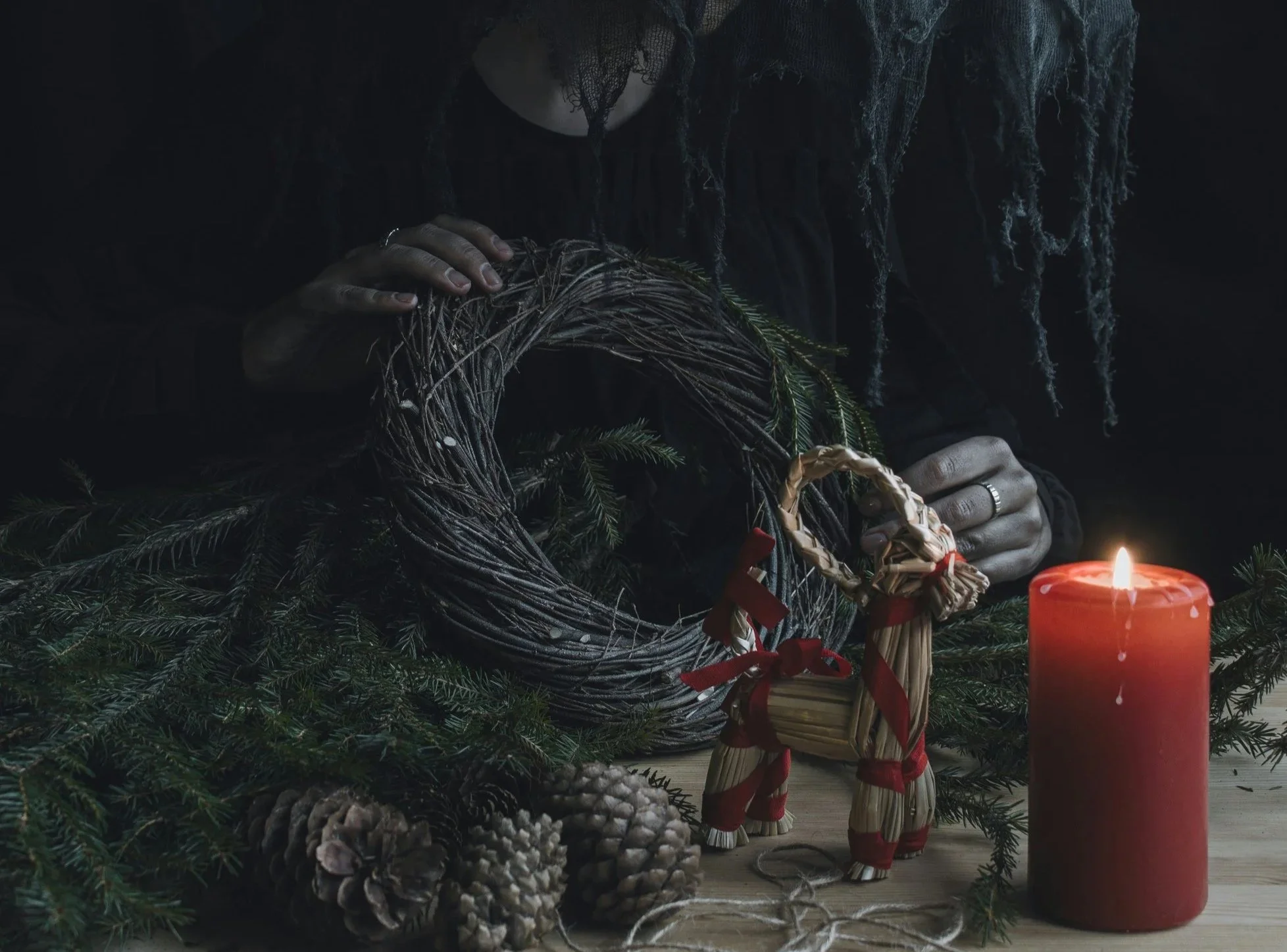
One of the oldest and most enduring symbols of Yule is the Yule Goat. Long before it became a festive ornament, the goat was a powerful symbol of fertility, protection, and the spirit of the harvest itself. Made from straw — the remnants of the year’s grain — the Yule Goat carried the life force of the fields through winter.
In Scandinavian tradition, the goat was not decoration.
It was a guardian.
I have had a Yule Goat for as long as I can remember. Growing up in Sweden, it appeared each year as part of Yule — steady, familiar, quietly watching over the season. It wasn’t something we questioned or explained. It simply belonged.
Now, as an adult, I see it for what it truly was: a keeper of memory, a living thread connecting past to present.
Objects like this carry more than symbolism — they carry continuity. They remind us that tradition is not something we recreate perfectly, but something we carry, often without realizing how deeply it shapes us.
Hearth, Fire & Everlasting Green
Yule is a hearth-centered season.
The Yule Log is one of the oldest midwinter traditions, rooted in reverence for fire as both protector and life-giver. In many Northern European traditions, a great log was brought into the home at Solstice and burned slowly over the Yule nights. Often, it was kindled using a fragment of the previous year’s log — a living flame carried forward — symbolizing continuity, protection, and the unbroken turning of the wheel.
The Yule Log was not simply fuel. It was blessed, sometimes decorated with greenery or marked with symbols, and burned with intention. Its fire was believed to ward off misfortune, protect the household, and invite blessings for the year ahead. Ashes were often kept and scattered on fields, mixed into soil, or saved as charms for protection and fertility.
Fire was prayer.
Fire was memory.
Fire was survival.
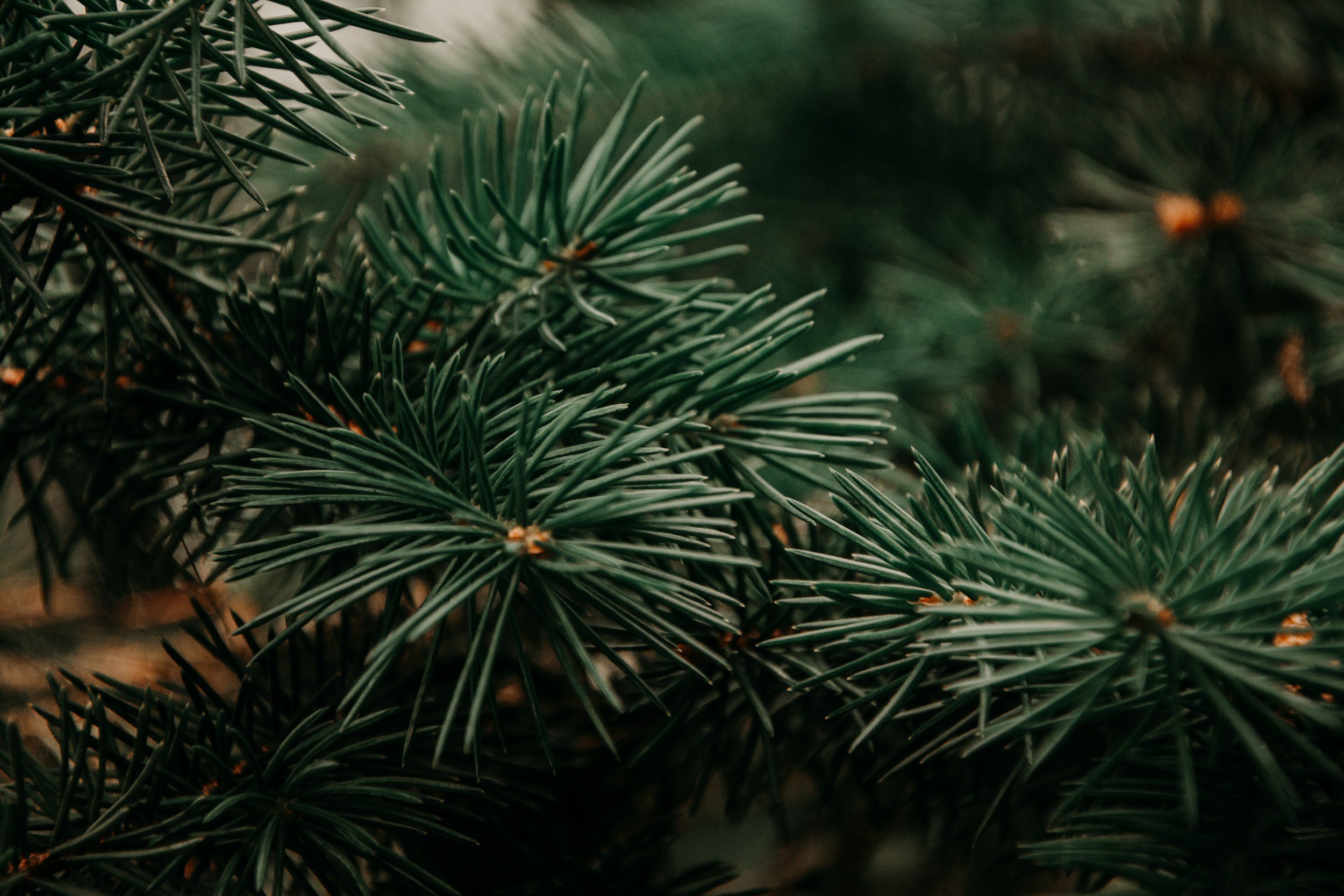
Evergreens — pine, fir, juniper — were brought indoors as symbols of endurance and eternal life. Even in the deepest cold, they remain green, reminding us that life continues beneath the surface.
Straw and grain, resting after harvest, represented the sleeping life force of the land — waiting, not gone.
Nothing was placed in the home without meaning.
Herbs & Spices of Yule
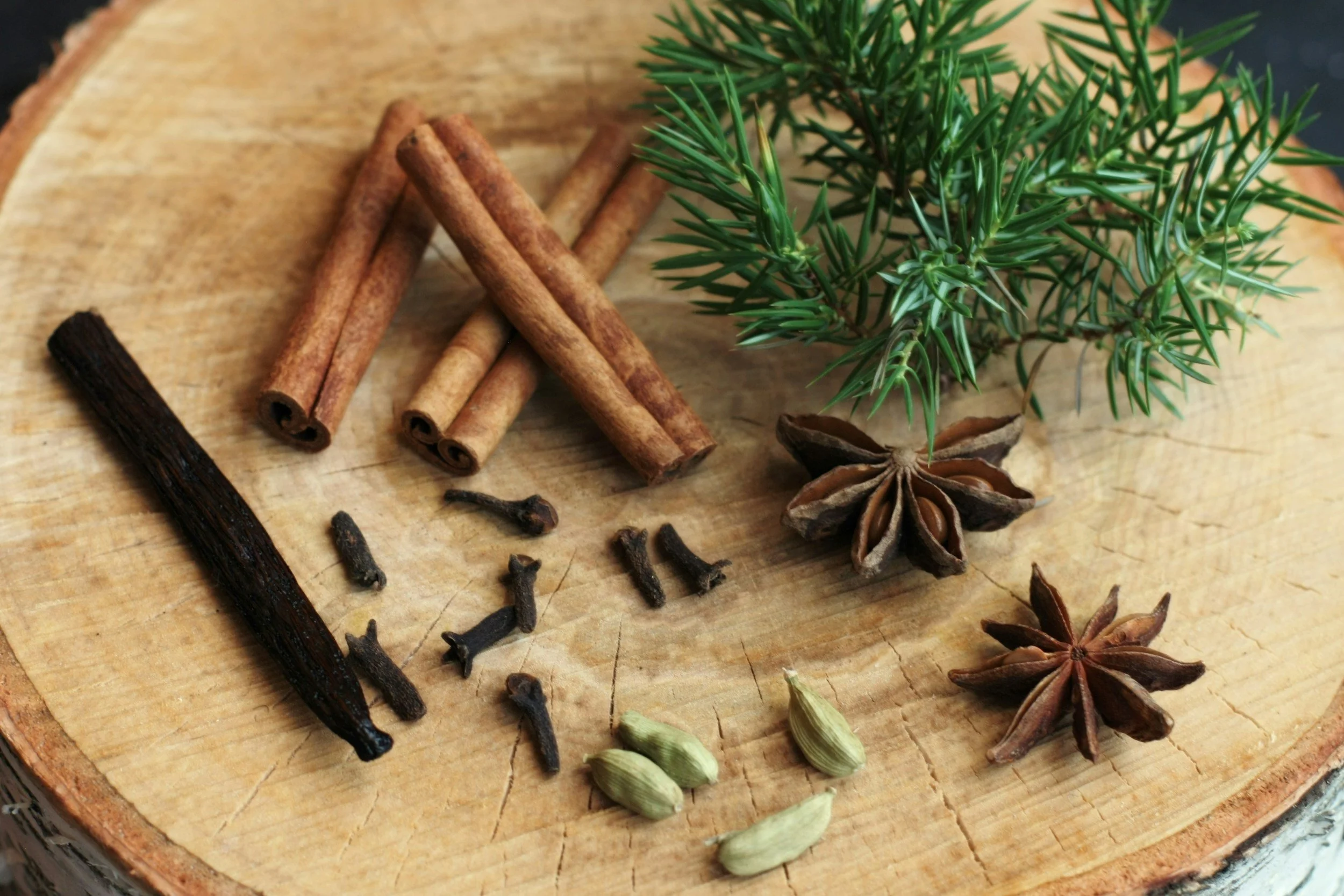
Yule is rich with scent, warmth, and nourishment. Herbs and spices were both medicine and magic — supporting the body through cold while honoring the returning sun.
Clove — warming, protective, preserving; often paired with citrus as solar magic
Cinnamon — circulation, vitality, inner fire
Cardamom — sweetness in darkness, heart warmth, comfort
Ginger — digestion, courage, awakening heat
Juniper — cleansing smoke, lung support, warding
Rosemary — remembrance, ancestors, hearth memory
Pine & Fir — breath, resilience, winter vitality
Oranges studded with cloves were more than decoration — they symbolized the sun, preservation, and protection, filling the home with light through scent.
Winter Rest as Sacred Work
Yule reminds us that rest is not laziness — it is wisdom.
The earth sleeps. Roots grow unseen. Life turns inward. This is not the season for constant output or forced brightness. It is a time for nervous systems to soften, for bodies to slow, for souls to listen.
Winter invites us to honor what survived the year — not by striving, but by resting.
A Candle for the Returning Light
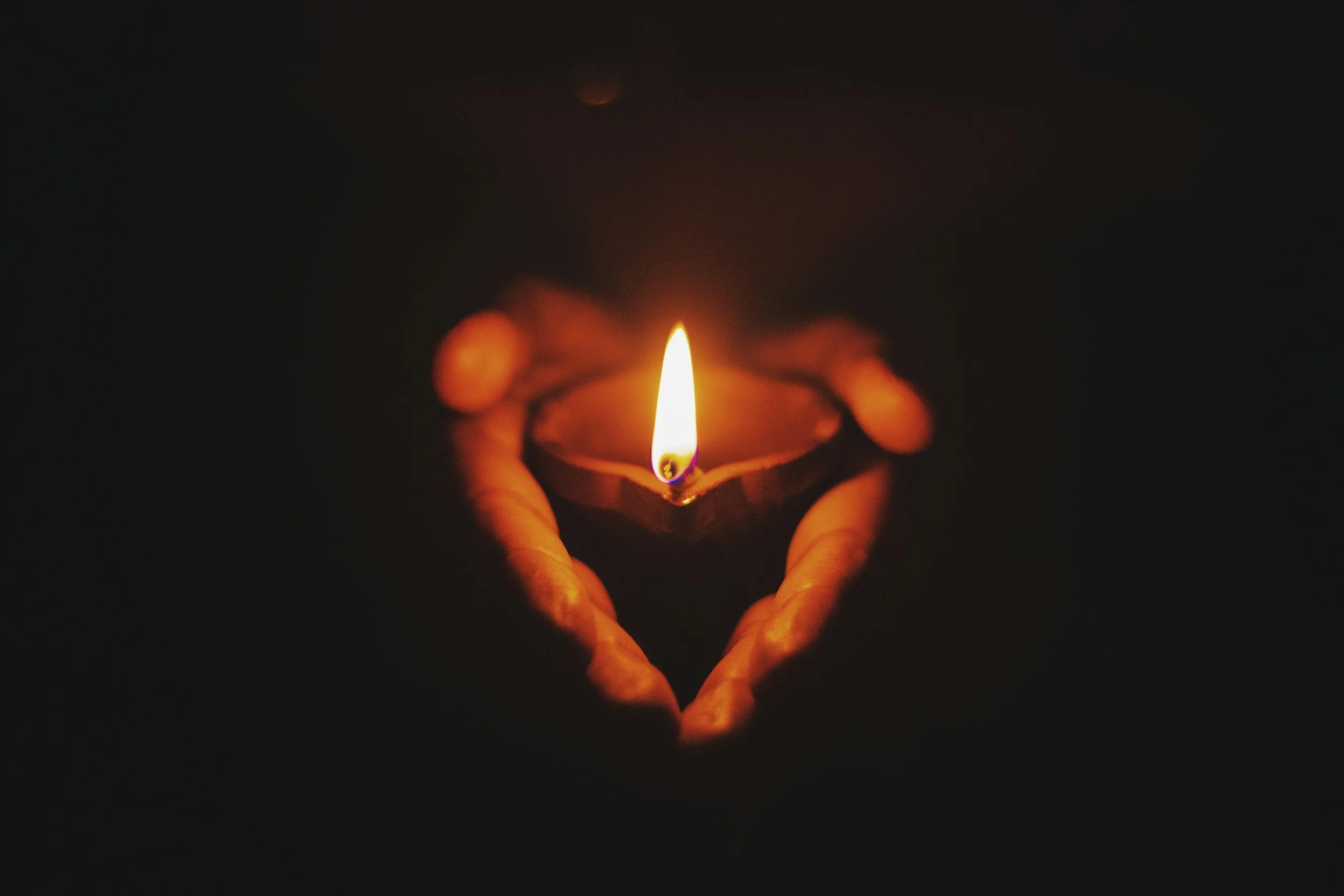
At Yule, light a single candle.
Sit with it quietly. Notice how small the flame is — and how steady. Reflect on what endured this year. What carried you through darkness. What still lives within you, even if unseen.
The light does not need to be large to be powerful.
It only needs to be tended.
As the days slowly lengthen, may you allow yourself rest. May you trust the cycle. May you remember that light always returns — softly, faithfully, and in its own time.